
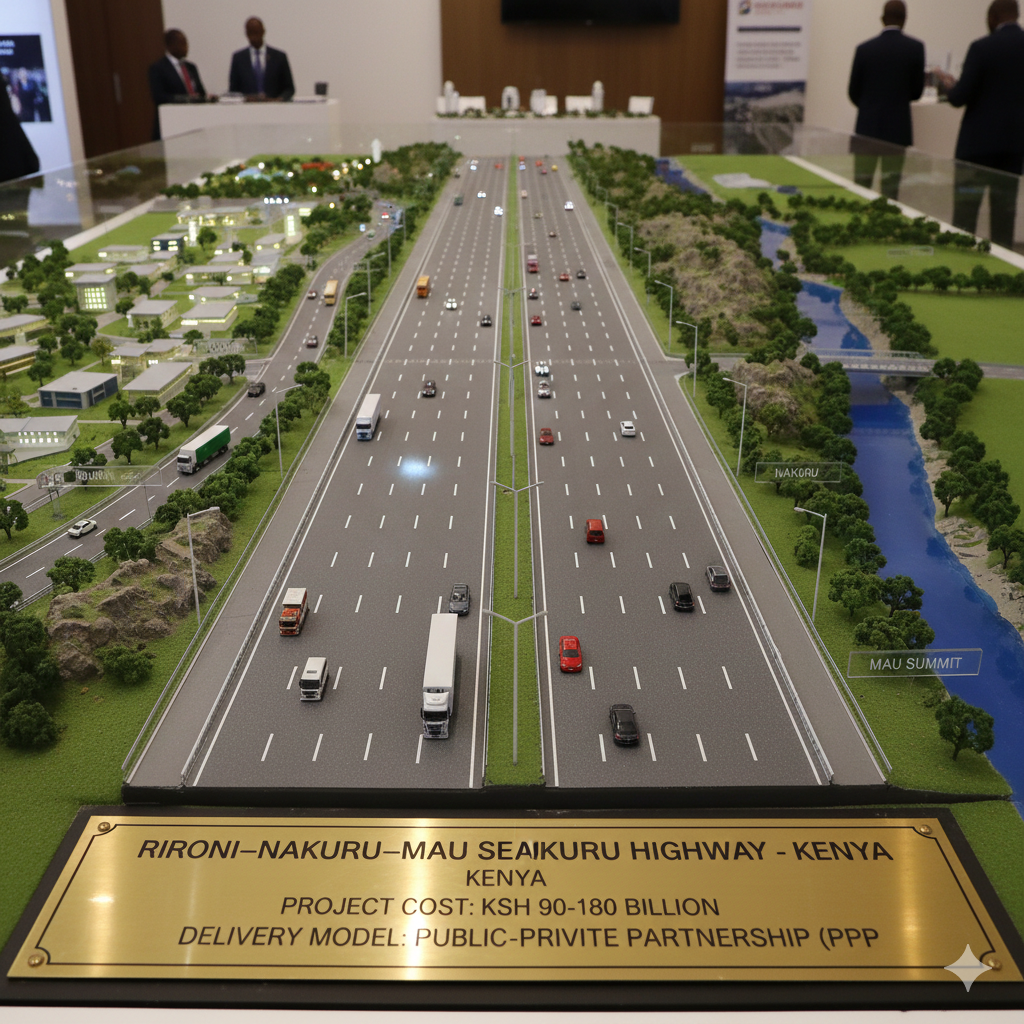
Kenya has today reached a major milestone in national infrastructure development after President William Ruto officially launched the construction of the Rironi–Nakuru–Mau Summit highway, a key upgrade to one of the country’s busiest transport corridors.
The 175-kilometre road will be expanded from a single lane to a four-lane dual carriageway, connecting Rironi in Kiambu County to Naivasha, Gilgil, Nakuru and finally Mau Summit. The route forms a vital part of the Northern Corridor, which facilitates trade from the Port of Mombasa to Uganda, Rwanda, South Sudan and the Democratic Republic of Congo.
Project Cost, Design and Delivery Model
The highway will be developed through a Public–Private Partnership (PPP) model. While official figures vary, estimates place the project cost between: KSh 90 billion and KSh 180 billion
Under the PPP framework, the private contractor will finance, build and operate the expressway before returning it to the government after an agreed concession period.
Construction is expected to take 18–24 months, with government sources projecting completion around mid-2027.
President Ruto: “A Game-Changer for Trade and Transport”
Speaking during the launch ceremony in Nakuru County, President Ruto emphasized the highway’s regional economic significance.
“This road will change how Kenya and East Africa trade. When complete, travel time will reduce, logistics will improve and businesses across the region will thrive.”
Transport Cabinet Secretary Kipchumba Murkomen echoed these sentiments, highlighting improved road safety, reduced congestion, and enhanced efficiency for long-distance transporters and small businesses alike.
Why This Road Matters for Kenya
The Rironi–Nakuru–Mau Summit road is heavily used by:
- Long-distance trucks
- Local tradersCommuters
- Tourism and hospitality operators
For years, the corridor has faced:
- Frequent traffic jams
- High accident rates
- Slow vehicle movement
Upgrading it to an expressway is expected to:
- Cut travel time between Nairobi and Nakuru significantly
- Reduce fuel consumption and vehicle operating costs
- Improve safety and driving experience
- Unlock new investment opportunities in Nakuru and Rift Valley counties
Traffic Advisory During Construction
Prior to the launch, the Kenya National Highways Authority (KeNHA) issued a public advisory urging road users to expect:
- Temporary diversions
- Construction-related delays
- Heavy machinery along the route
Motorists were encouraged to plan travel times accordingly during the project rollout phase.
Public Reaction and Local Expectations
While many residents, transport players and business owners welcomed the project as overdue and transformative, some civil society groups raised concerns regarding:
- Transparency of the contract
- Cost implications of the PPP model
- Timing of the launch before final procurement disclosures
Despite these debates, overall public sentiment remains largely optimistic, with many hoping the expressway will boost trade, tourism, agribusiness and urban growth across the Rift Valley.
Conclusion
The launch of the Rironi–Nakuru–Mau Summit highway marks a significant step in Kenya’s long-term transport modernization agenda. Once completed, the road is expected to reshape mobility, strengthen economic productivity, and position Nakuru as a key commercial hub in East Africa.
Comments (0)
No comments yet. Be the first to comment!
Leave a Comment